

Fogo Island's Caribou Herd: Facts, habits, and where you might find them
Fogo Island is home to a small caribou herd that was first introduced to the island in the early 1960s. During that time, the provincial government brought caribou to 20 islands around Newfoundland for food security and conservation. The introduction on Fogo Island is considered to be the most successful, with a herd of 26 animals growing to just under 200 today.
While the caribou on Fogo Island can be elusive, we’ve learned a lot about them from a dedicated research team that has been studying the herd since 2016 — the longest-running caribou research project in Canada. Led by Dr. Quinn Webber, a behavioural ecologist, the team is composed of students and scholars from the University of Guelph in Ontario and Memorial University of Newfoundland in St. John’s.
Their commitment to our caribou help us understand this charismatic species, that enriches our natural world and is beloved by the community.
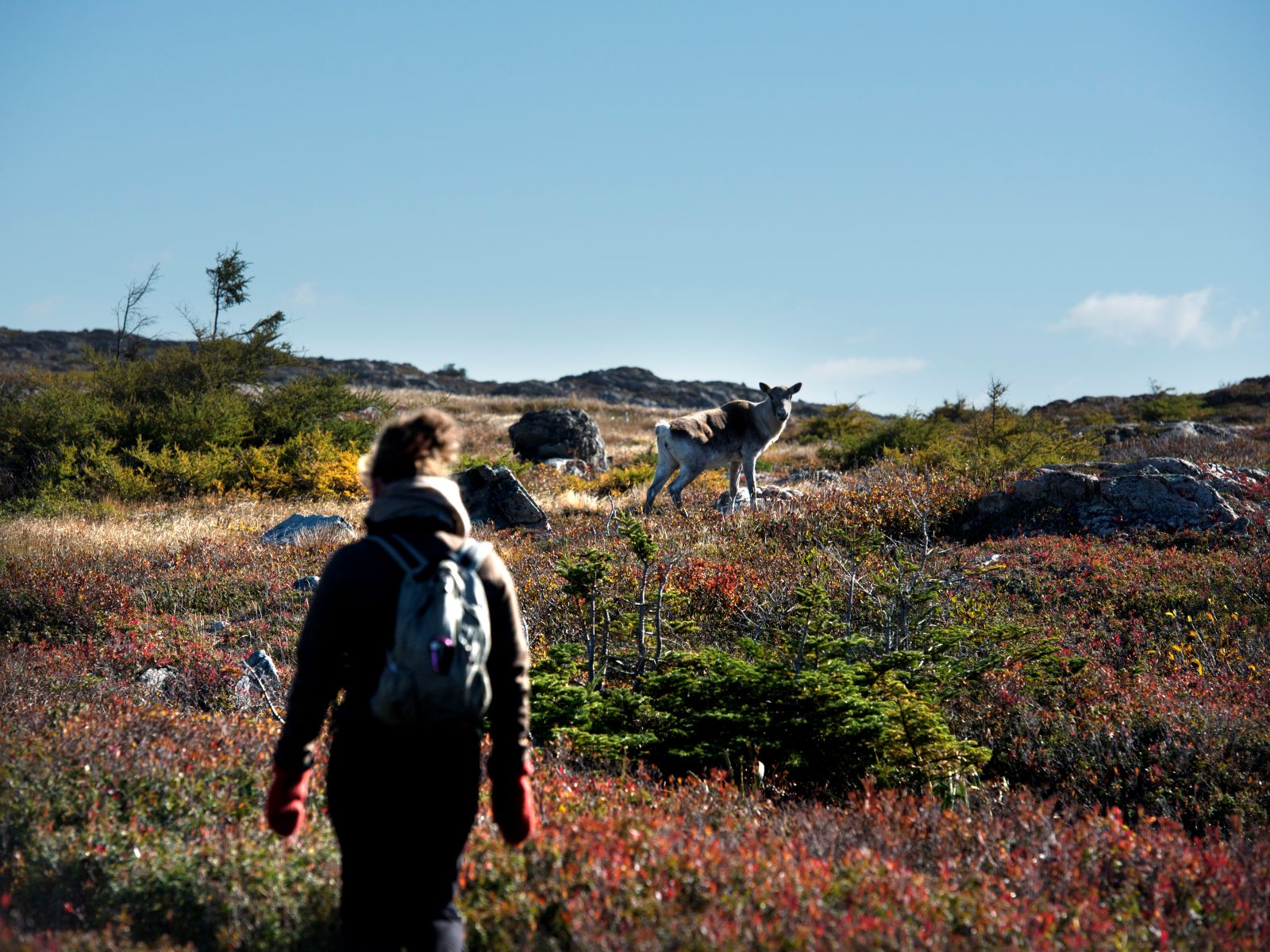
- 1. Caribou in Canada have three distinct ecotypes that live in different areas and have slightly different ecologies. These include boreal (woodland), mountain, and barren ground. In Newfoundland, we have woodland caribou, which live mostly in the boreal forest and coastal barrens – the two primary habitats on Fogo Island.
- 2. Did you know caribou are excellent swimmers? Swimming between the islands is a way of life for the Fogo Island herd. Their large hooves, which act as snowshoes on land, make excellent paddles in the water; and the hollow hair shafts, which keep them warm in winter, help them stay buoyant while swimming. This behaviour is rarely seen in other herds across Canada.
- 3. Caribou are a member of the deer family. They are the only species in this family where both males and females grow antlers. Male caribou start growing their antlers in spring, so they’re fully grown in time for the fall rut, or breeding season — they usually lose them in December or January. Females, on the other hand, start growing their antlers in late summer and then shed them the following spring.
- 4. One theory as to why 20% of female caribou on Fogo Island have antlers is so they can defend the craters they dig in the snow to preserve food. The heaviest females are most likely to have antlers, because they were better able to defend their food sources from other caribou. In 2024, the research team recorded an earlier-than-usual antler drop in females. This was linked to an earlier snowmelt that year and seen as a possible red flag for climate change, illustrating how quickly the herd responds to environmental cues.
- 5. Throughout Canada, wolves, bears, and lynx are the primary predator of caribou. On Fogo Island, coyotes are assumed to be the only predator and, since they are smaller than wolves, coyotes only pose a threat to the newborn calves and to older or sick adults. There is no current estimate of coyote population size on the island; their dens are difficult to locate, but researchers believe our habitat could only support six to ten.
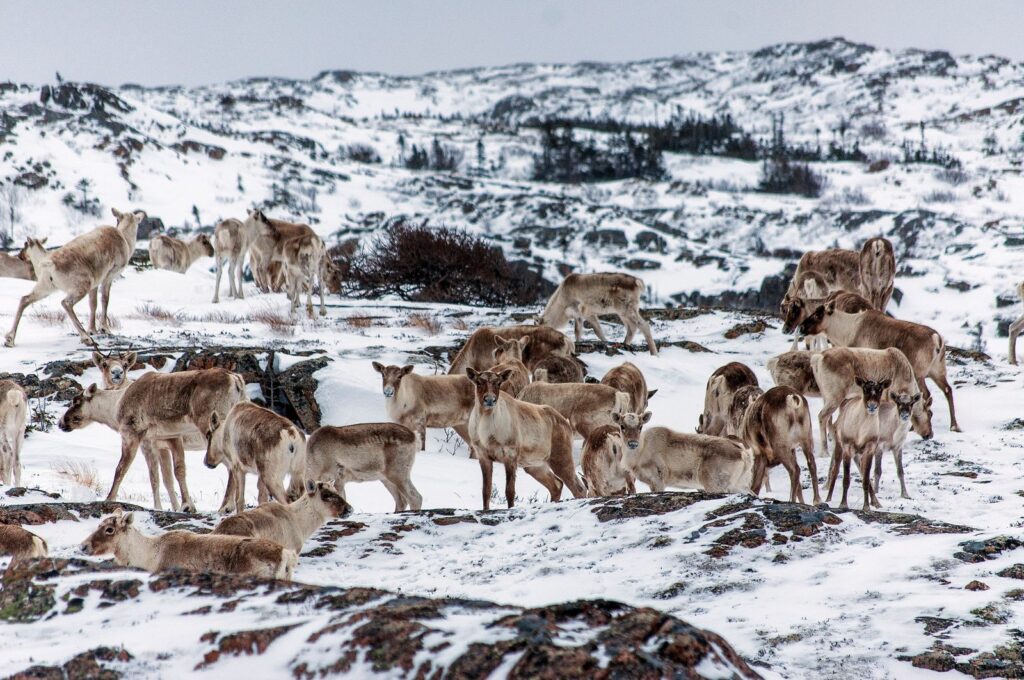
- 6. Caribou are avid travellers, with some herds in the Arctic travelling over 1,000 km during the migration period. On Fogo Island, the caribou have a high affinity for place and their movements fluctuate with the seasons. In winter, they are more sedentary and social, clustering together, often with the same companions. In spring, females tend to return to the same area to give birth. In summer, the caribou travel across the island; females stay with their calves and males tend to be solitary, often congregating on Indian Islands. They begin to gather again around the holiday season.
- 7. Due to these travelling patterns, winter is often the best time to see caribou on Fogo Island, when they graze in larger numbers closer to roadsides and communities. Their coats also lighten in winter, making them easier to spot, while their darker summer coats blend in with the natural palette of our island’s landscapes.
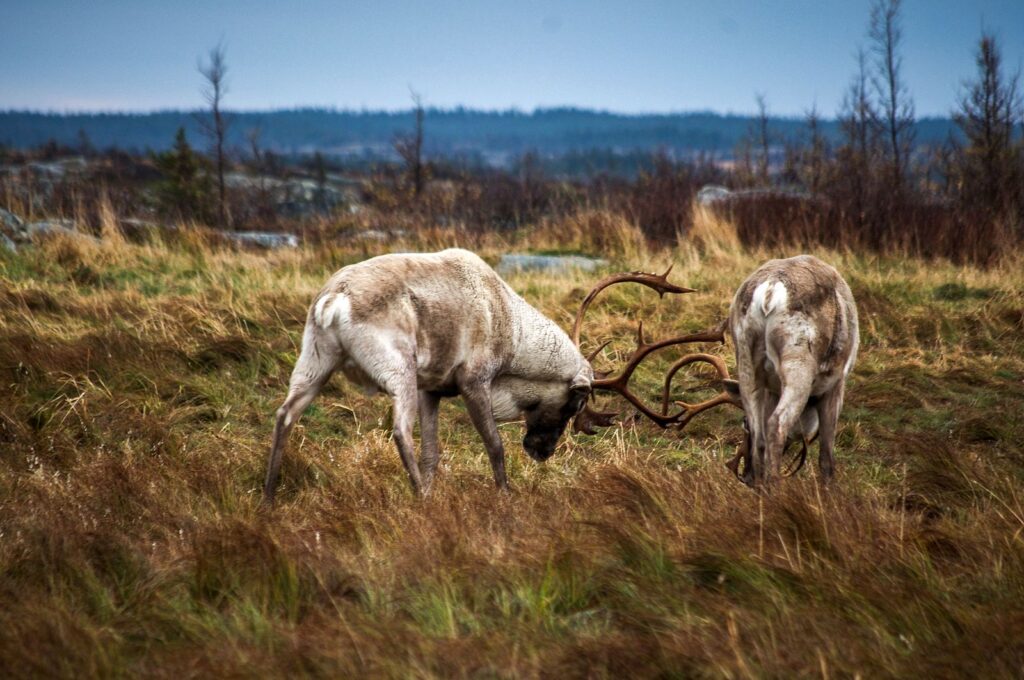
- 7. Within the Fogo Island herd, female caribou greatly outnumber the males (about 4 to 1). A small percentage of calves live past their first year, usually 20%, but only 10% on Fogo Island due to harsh winters. A typical caribou life span ranges from 10 to 13 years.
- 8. The research team detected a decline in the caribou population on Fogo Island since 2019, when it peaked at 320. Estimating the 2026 population at 160 to 180 animals, Dr. Webber and the team are now focused on understanding this decline. While their research has led to a few theories, from habitat changes to predation, Dr. Webber believes that population changes are a normal part of the natural cycle and the number of caribou will eventually increase again in the future.
- 9. About 10% of the animals on the island are monitored with the help of telemetry collars that track location and movement data. Newfoundland and Labrador’s Wildlife Division is responsible for placing the collars on caribou that are at least 3 years old and represent the larger, healthier animals of the herd. All collared caribou are given names, often inspired by the places where they were found. Names include Ether (for Etheridge's Point in Joe Batt’s Arm), Fogo, and Tilting.
- 10. Fogo Island is a unique place for studying caribou, allowing researchers to get up close to the species, which is more difficult in other, more remote parts of Canada where herds can only be reached by helicopter or charter plane. Caribou biologists have described the Fogo Island population as “boutique” and findings from the research team here are often useful to other studies pursued across the country.
Source: Caribou of Fogo Island Talk by Dr. Quinn Webber, Fogo Island Inn, July 30, 2026.

Plan Your Stay
Complement your stay with outdoor activities and excursions that allow you to immerse yourself in the natural world and get to know our island’s flora and fauna.
The caribou follow their own schedule, but taking part in a guided hike, foraging excursion, or traditional boil-up can only increase the chances of sighting our four-legged friends.